Three rockets, each flying what the next one needs. The Guinea Pig goes to 100 km in 2027, Spark takes the design to orbit, and Lightning turns it into a launch service: operational by late 2031 and flying every Tuesday and Thursday by 2032.
Mission 001
The first flight of The Guinea Pig: a 600 kg rocket on our Big Piggy engine, flying to at least 100 km, the edge of space, to turn our simulations into measured flight data.
Late 2027 · Target Window Launch site: FAR, Mojave, California
Where the Work Stands
63+
Big Piggy engine design iterations
Complete
Big Piggy engine design: CAD complete and 3D print ready, to be printed in Inconel 718
112.9 km
Simulated apogee, 103 to 124.2 km across the sweep
In Progress
Big Piggy Engine Test Stand
These are design and simulation results, not flight hardware yet. We are building the Big Piggy engine test stand now; hardware photos and hot-fire data will be published as it comes online.
Founding team recruited across propulsion, structures, avionics, software and business.
October–December 2026
Design & Fundraising
Big Piggy engine and vehicle design, flight simulations and fundraising for hardware and the engine test stand.
January–March 2027
Build & Development
Workspace set up, test stand built, and avionics and recovery systems developed in parallel.
April–November 2027
Test & Integrate
Subsystem testing, including Big Piggy hot fire on the test stand, then final integration and launch preparation.
Late 2027
Launch Window
The Guinea Pig flies at the FAR launch site, aiming for 100 km. Flight data and a results write-up follow.
Our first video. Opens on YouTube.
Three Rockets, One Launch Service
Each phase flies the technology the next one depends on, so by the time we build Lightning, every major system has already flown. Phase 3 is the product. Phases 1 and 2 are how we get there without betting everything on one first flight.
Each program budget covers research and development, hardware, and room for many failures while we perfect that phase's systems for the next one. See the Phase 1 Breakdown
THE GUINEA PIG
The Guinea Pig
In Development · Late 2027
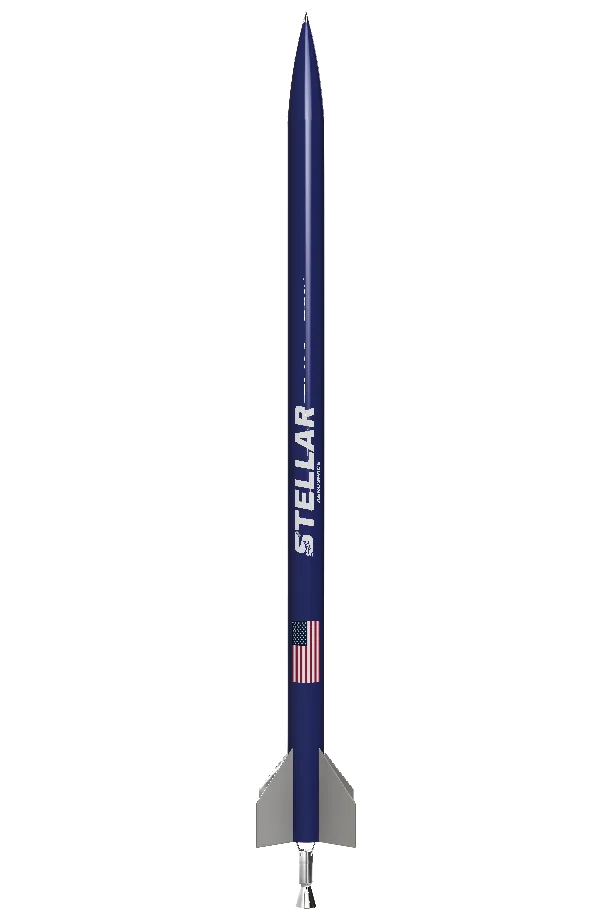
Our first rocket and our flying test bench. A 600 kg suborbital vehicle on our Big Piggy kerosene and liquid oxygen engine, built to reach the 100 km edge of space. Its flight data checks our simulations against reality and flight-tests the guidance, payload mount and software that Lightning will inherit.
Next · Orbital Demonstrator · Complete by Late 2029
A smaller Lightning that can reach orbit with up to 100 kg. Nine Firebird engines on the first stage and three vacuum-optimized Firebirds on the second: regeneratively cooled, 3D printed in Inconel 718 and fed by battery-powered electric pumps. Spark flies no paying customers: it is our test vehicle, where we can afford crashes while we prove every Lightning system, from the tower catch to the arena landing.
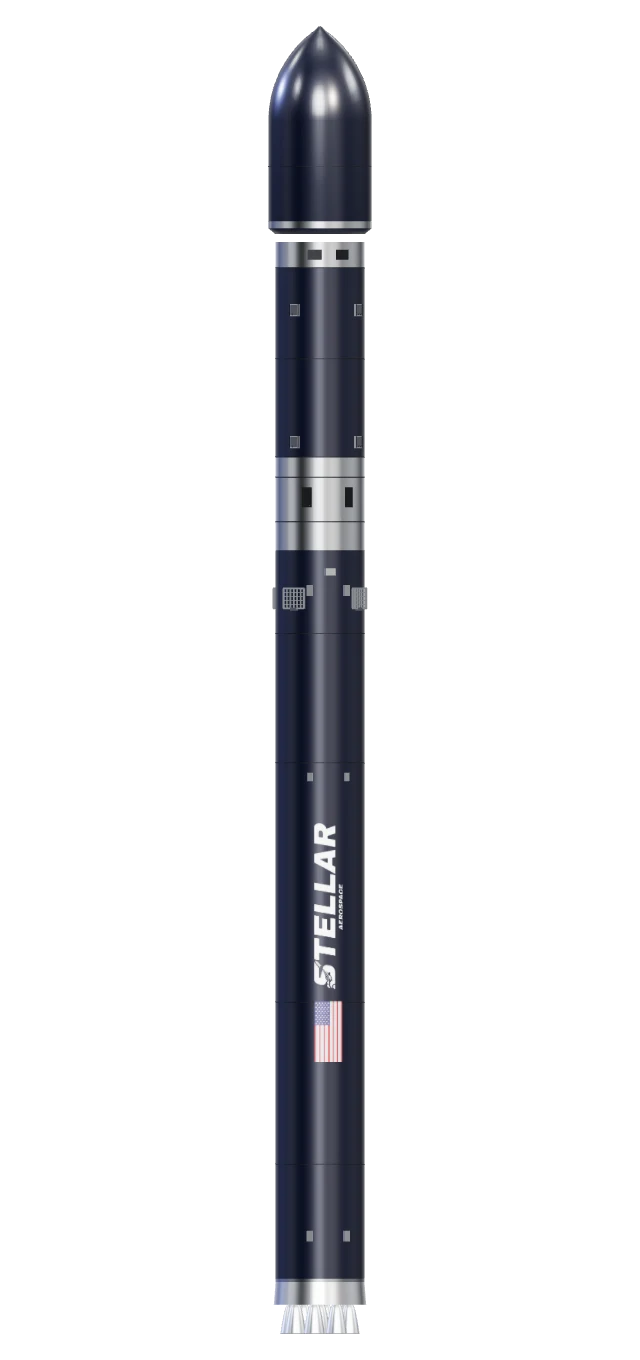
Our commercial launch service. A fully reusable rocket that carries up to 2,750 kg to Low Earth Orbit for a flat $5,000 per kilogram, booked online and flying twice a week. The launch tower catches the booster and the upper stage is hooked and netted in our recovery arena, so nothing is thrown away.
2,750 kg2,750 kgTo LEO, Single Satellite (2,500 kg Full Rack)